Forex Trading Strategies That Actually Work in 2026
A practical guide to forex trading strategies: trend-following, range trading, position sizing, session timing and the mistakes to avoid.
The forex trading strategies that hold up are the plain ones you can repeat under pressure: follow a clear trend, trade a defined range, and size every position so one loss cannot hurt you. Winning at currencies has far less to do with a secret indicator and far more to do with matching a simple method to the current market and then managing risk without exception.
This guide walks through the core approaches, when each one fits, how to size positions on currency pairs, how to build a repeatable routine around trading sessions and volatility, and the mistakes that quietly drain new accounts. The market itself is enormous and liquid: the Bank for International Settlements reported that global foreign exchange turnover reached $9.6 trillion per day in April 2025, a 28% increase from the $7.5 trillion recorded in 2022. That depth is what makes disciplined strategies work.
Core Forex Trading Strategies and When to Use Each
Most profitable strategies for forex trading fall into a few families. You do not need all of them. You need to know which one matches the market in front of you.
- Trend-following. You identify a clear direction and trade in its favor, adding or holding while the trend persists. Best in strongly directional markets driven by a central bank policy shift or a sustained economic theme.
- Range trading. You buy near a well-tested support level and sell near resistance, assuming price will stay boxed in. Best in quiet, sideways conditions where no clear driver exists.
- Breakout trading. You wait for price to escape a range or consolidation and trade the move that follows. Best when volatility is expanding, often around scheduled news or a session open.
- Carry-influenced positioning. You favor holding a higher-yielding currency against a lower-yielding one over longer horizons. Best when interest rate gaps are wide and stable.
The skill is not memorizing all four. It is reading whether the market is trending, ranging or breaking out, then applying the matching approach and standing aside when nothing fits.
Trend-Following vs Range-Bound Approaches
These two are the workhorses of trading strategies in forex, and they are opposites by design.
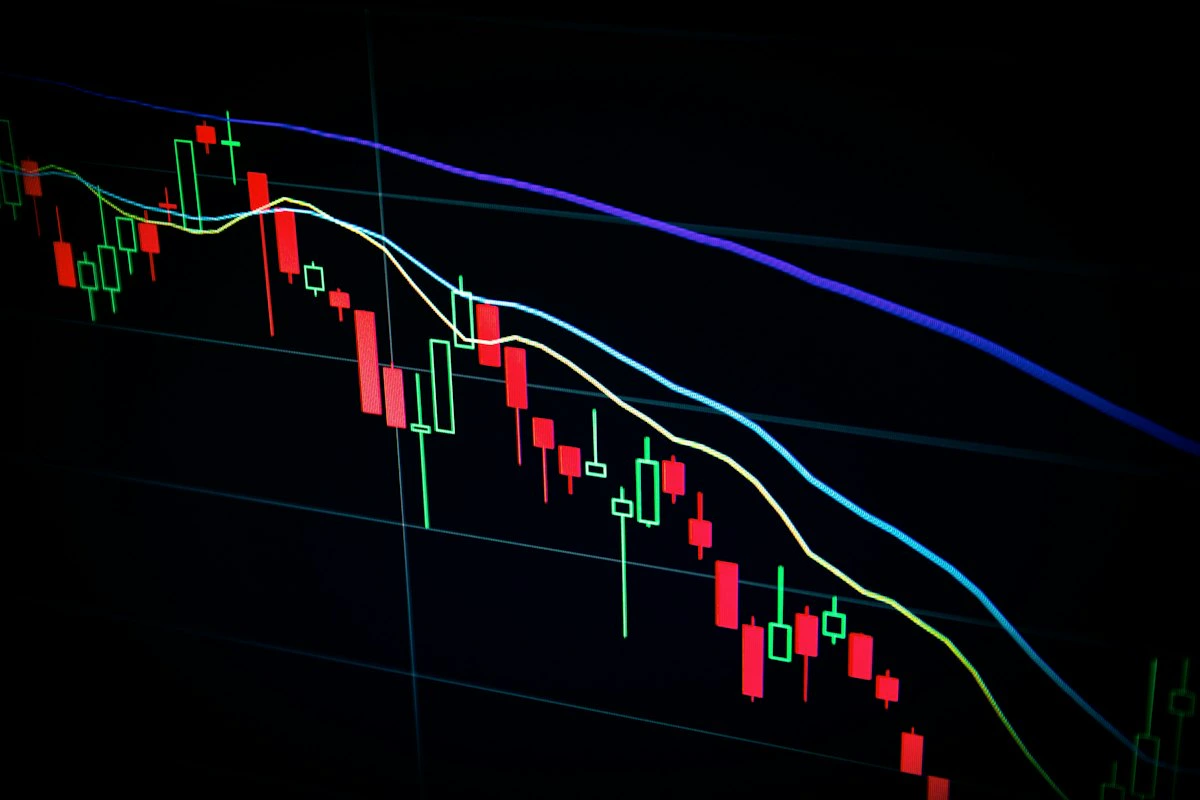
Trend-following asks a single question: which way is price moving on the timeframe I trade? A common structure is to check the direction on a higher timeframe, such as the daily chart, then enter on a smaller pullback in that same direction. Moving averages, higher highs and higher lows, or a simple channel can define the trend. The strength of this approach is that your winners can run far beyond your losers. The weakness is that trends are rarer than they feel, so you accept many small losses while you wait for the move that pays for them.
Range trading flips the logic. When price oscillates between a floor and a ceiling, you fade the extremes: buy near support, sell near resistance, and keep targets modest. It rewards patience and precision and tends to produce a higher win rate with smaller individual gains. Its danger is the breakout: the moment a range ends, a range trader is on the wrong side of a fast move, which is exactly why a hard stop beyond the range is not optional.
The practical rule is simple. If the chart is making a staircase of higher highs or lower lows, follow it. If it is bouncing between two flat lines, fade it. Forcing a range strategy onto a trending market, or the reverse, is one of the fastest ways to lose money.
Position Sizing and Risk Management for Currency Pairs
Entries get the attention, but position sizing decides whether you survive. The single most useful habit in strategies for trading forex is to fix your risk per trade as a small percentage of your account, then size the position so that if your stop is hit, you lose only that amount.
A workable framework:
- Set risk per trade first. Decide the maximum you will lose on any one position, often around 1 percent of account equity. This number is the anchor for everything else.
- Place the stop where the idea is wrong, not where the loss feels comfortable. On a trend pullback, that might be below the recent swing low. On a range trade, just beyond the boundary.
- Derive the position size from the stop distance. The wider the stop, the smaller the position. This keeps the dollar risk constant even when volatility changes.
- Aim for a reward that justifies the risk. Many traders look for at least twice the reward relative to the risk, so a modest win rate still produces a positive expectancy.
Pair selection feeds directly into this. Major pairs that include the US dollar tend to have the tightest spreads and the most orderly behavior, which matters because the dollar sits on one side of 89.2% of all forex trades, according to the BIS. The euro, the next most active currency, appears in 28.9% of trades. More liquid pairs make stops and sizing behave predictably. Thin, exotic pairs can gap through a stop and turn a planned 1 percent loss into something larger.
Building a Repeatable Strategy Around Sessions and Volatility
A strategy is only as good as your ability to run it the same way every day. Two levers make that possible: trading the right session, and respecting volatility.
Sessions. The forex day rolls through Asian, London and New York hours. Liquidity and movement are not spread evenly. The London session and the London-New York overlap concentrate the most volume and the cleanest moves in major pairs, which is why many traders build their routine around those windows and ignore the quiet hours entirely. Spot transactions alone, the most immediate form of currency dealing, ran at $3 trillion per day in April 2025 and made up 31% of global turnover, so there is no shortage of activity to work with during active hours.
Volatility. Some strategies want movement and some want calm. Breakout and trend entries need volatility expanding, often around a session open or a scheduled release. Range trades want the opposite: a market that is drifting sideways with no catalyst on the calendar. Checking the economic calendar before you trade tells you which regime you are likely in, so you can pick the right tool instead of guessing.
Turning that into a repeatable routine looks like this: confirm the session and check the calendar, define the market state as trending or ranging, apply the matching strategy with a preset risk amount, and record every trade so the process can be reviewed. That review loop is where a desk-level discipline pays off. Understanding how a professional operation separates strategy, execution and risk oversight is useful even for a solo trader; our guide on how modern trading desks work breaks down that structure. At Pntgp, the same principles of session awareness and defined risk sit at the center of how our desk approaches active trading and portfolio support.
Common Mistakes New Forex Traders Make and How to Avoid Them
The errors below are predictable, and each has a plain fix.
- Overtrading. Taking positions out of boredom or to recover a loss. The fix is a written rule for what a valid setup looks like, and permission to do nothing when the market does not offer one.
- Oversizing. Risking too much on a single trade so that one loss does real damage. The fix is fixing risk per trade first and deriving size from the stop, never the other way around.
- Ignoring the stop. Moving or removing a stop when price runs against you. The fix is treating the stop as the point where the trade idea is invalid, set before entry and left alone.
- Strategy hopping. Switching methods after two or three losses, so no approach ever gets a fair sample. The fix is committing to one strategy across a defined number of trades before judging it.
- Underestimating the odds. Assuming most traders win. The reality is the opposite. European regulator ESMA found that 74-89% of retail investor accounts lose money on leveraged products such as CFDs, which is why mandatory risk warnings now carry that figure. Respecting that number keeps position sizes honest.
None of these fixes require a better indicator. They require a plan and the discipline to follow it.
Where to Go From Here
Pick one strategy that matches how markets are behaving this week, whether that is trend-following in a directional pair or range trading in a quiet one. Write down your risk per trade, your entry rule and your stop placement, then paper trade or trade small for twenty positions before you judge it. Track every result. That single controlled experiment will teach you more than another article, and it turns a strategy on the page into one you can actually run.
Frequently asked
What is the most reliable forex trading strategy for beginners?
A simple trend-following approach on higher timeframes is usually the most forgiving for beginners. It trades with the dominant direction, requires fewer decisions per day and pairs well with strict risk limits.
How much should I risk per forex trade?
Most disciplined traders risk a fixed small percentage of account equity per trade, commonly around 1 percent. This keeps any single loss minor and lets you survive a normal losing streak without serious damage.
Which currency pairs are best to trade?
Major pairs involving the US dollar, such as EUR/USD and GBP/USD, tend to have the tightest spreads and the most predictable behavior because the dollar is involved in the large majority of global forex volume.
When is the best time to trade forex?
The London session and the London-New York overlap offer the highest liquidity and clearest movement for major pairs. Matching your strategy to an active session for your chosen pair improves consistency.
Why do most new forex traders lose money?
The common causes are overtrading, using too much leverage, sizing positions too large and abandoning a strategy after a few losses. Regulators have found that a large majority of retail accounts lose money on leveraged products.