What Is a Trading Desk? How Modern Desks Work
A trading desk executes orders, manages risk and sources liquidity. See how modern desks work and how they differ from retail accounts.
A trading desk is the coordinated setup, people, technology and market connections, that a firm uses to execute orders, manage risk and source liquidity. If you are comparing providers and want your capital handled with more discipline than a self-directed account allows, understanding how a desk works tells you exactly what you are paying for.
The term covers everything from a single specialist at a bank to a full room of traders and automated systems handling billions in daily flow. What ties them together is purpose: getting trades filled at good prices while keeping risk under control. This article explains what a trading desk does, the main types you will encounter, how a professional desk manages execution and liquidity, how a managed desk differs from a plain retail account, and how Pantera GP structures its desk for active traders in the UK.
What a Trading Desk Is and the Role It Plays
At its core, a trading desk is where orders meet the market. When you place a trade, someone or something has to route it, find a counterparty, agree a price and confirm the fill. On a self-directed platform, you do all of that yourself through the interface. On a professional desk, that job belongs to traders and execution systems whose full-time work is doing it well.
The desk plays three connected roles in financial markets. First, execution: turning a decision to trade into a completed transaction at the best available terms. Second, risk management: monitoring open positions so a single bad move does not wipe out an account. Third, liquidity: making sure there is enough depth on the other side of a trade so orders fill without moving the price against you.
The scale involved is easy to underestimate. Global over-the-counter foreign exchange turnover reached 9.6 trillion dollars per day in April 2025, according to the Bank for International Settlements Triennial Survey. A professional desk exists to plug into that flow and work within it, rather than leaving an individual trader to navigate it alone.
Types of Desks: Equities, Forex, Crypto and Multi-Asset
Desks are usually organised around the market they serve. Each asset class has its own rhythm, its own liquidity patterns and its own risks, so specialisation matters.
- Equities desks trade shares in listed companies. They deal with market open and close dynamics, corporate actions, and the way liquidity concentrates in certain names and thins out in others.
- Forex desks trade currency pairs. The FX market runs around the clock across global sessions and is the deepest market by daily turnover, which shapes how a forex desk manages timing and slippage.
- Crypto desks trade digital assets. This market never closes, spreads and volatility can be wide, and liquidity is fragmented across many venues, so execution routing is a real skill.
- Multi-asset desks combine several of these under one roof. The advantage is a single risk framework across markets and the flexibility to move exposure where the opportunity is strongest.
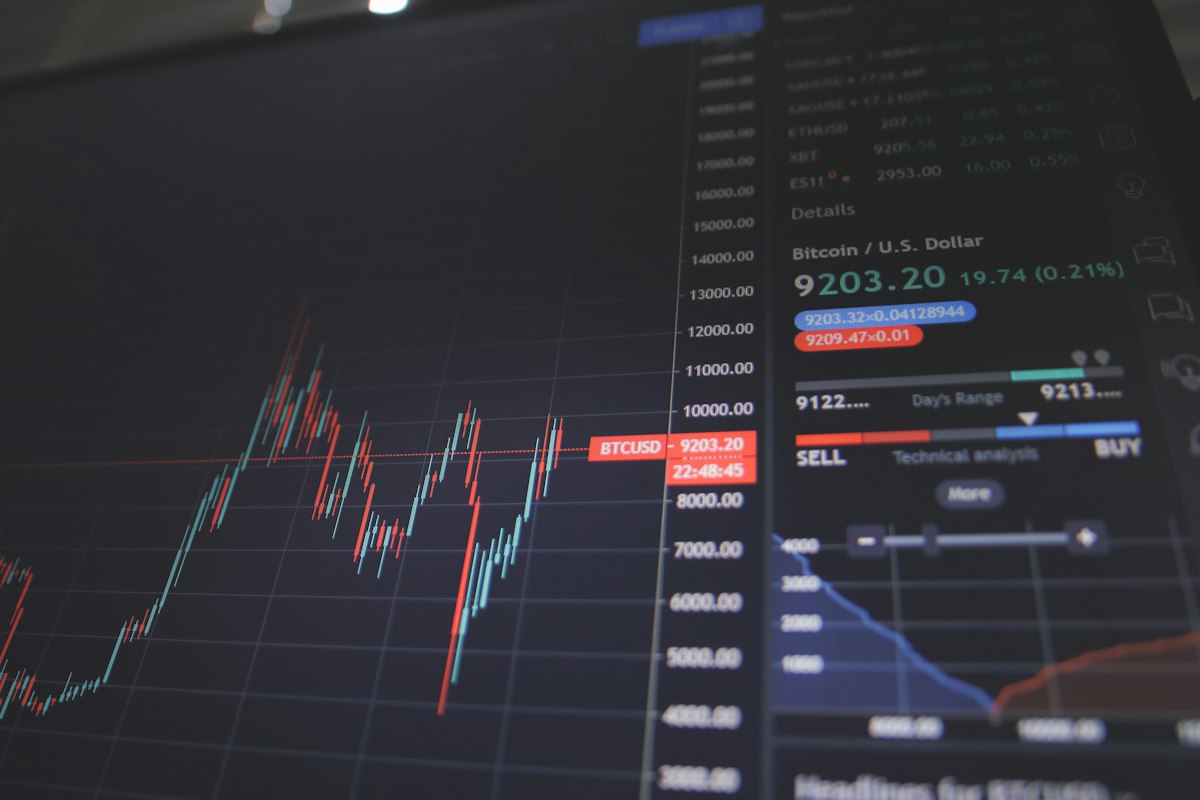
The choice between a single-market desk and a multi-asset desk depends on the trader. Someone focused entirely on currency pairs may prefer a dedicated forex operation. An active trader who wants exposure across equities, currencies and digital assets is usually better served by a multi-asset desk that keeps everything under one set of controls.
How a Professional Desk Manages Risk, Execution and Liquidity
The value of a desk shows up in the three functions it performs continuously.
Execution
Good execution means getting filled at a price close to what you expected, with minimal slippage. A professional desk does this through direct market access, smart order routing and relationships with liquidity providers. Instead of sending an order into a single venue and hoping, the desk can split it, time it and route it to where the best price sits at that moment.
Risk
Risk management is where a desk earns its keep over the long run. This includes position sizing so no single trade is oversized, stop-loss discipline that is actually enforced rather than optional, and continuous monitoring of total exposure. The FX market that reached 9.6 trillion dollars in daily turnover can move fast, and a desk that watches exposure in real time protects capital in a way a distracted individual rarely matches.
Liquidity
Liquidity is the ease of getting in and out of a position without moving the price. Deep liquidity is available in major markets, but it is not evenly spread. A desk sources it by maintaining connections to multiple venues and counterparties, so even larger orders can be filled without pushing the market against the trader.
These three functions reinforce each other. Strong liquidity access improves execution, and disciplined execution keeps risk contained. That is the practical reason a desk can outperform a self-directed setup over time.
Retail Account Versus a Managed Trading Desk
A retail brokerage account and a managed trading desk are two different propositions, and knowing the gap between them matters when you are choosing where to put your capital.
A retail account gives you a platform, market data and the ability to place your own orders. Everything after that is on you: deciding what to trade, sizing the position, timing the entry and exit, and holding the line on risk. The tools are capable, but the discipline and the execution quality depend entirely on your own consistency. Many self-directed traders lose money, and the common causes are oversized positions, poor risk control and emotional decisions under pressure.
A managed trading desk applies professional execution, position sizing and continuous risk supervision on your behalf. You are still the account holder, but the day-to-day work of executing well and managing exposure is handled by people and systems built for it. The trade-off is straightforward: you give up some hands-on control in exchange for discipline and market access that are hard to replicate alone.
The right choice depends on your goals and how much time you can commit. A trader who wants full control and has the temperament for it may prefer a retail account. Someone who wants active participation in markets without carrying the full execution and risk burden is a better fit for a managed desk.
How Pantera GP Structures Its Desk for UK Active Traders
Pantera GP runs a multi-asset trading desk built for individual active traders in the UK. The structure brings together the three functions covered above into one setup, so a trader does not have to assemble execution, risk and liquidity access piece by piece.
On execution, the desk uses direct market access and order routing designed to reduce slippage across equities, forex and crypto. That matters most in fast-moving markets, where the difference between a good fill and a poor one compounds over many trades.
On risk, the desk applies structured controls: defined position sizing, enforced risk limits and continuous monitoring of open exposure. For an active trader, this is the layer that turns a run of good ideas into durable results, because it keeps a single bad session from doing outsized damage.
On liquidity, the multi-asset design lets Pantera GP source depth across markets and shift exposure toward where opportunity is strongest, rather than being confined to one asset class. For a UK trader who wants to be active across currencies, shares and digital assets, that flexibility under a single risk framework is the practical benefit of a desk over a stack of separate accounts.
If you are weighing up how to trade more actively, the useful next step is to map your own goals against the three desk functions. Decide how much execution quality, risk supervision and cross-market access you actually need, then compare that against what a self-directed account asks you to handle alone. That comparison, more than any single feature, tells you whether a managed desk like Pantera GP fits how you want to trade.
Frequently asked
What does a trading desk actually do?
A trading desk executes buy and sell orders, manages the risk on open positions, and sources liquidity so trades fill at fair prices. It combines people, technology and market access in one coordinated setup.
What is the difference between a trading desk and a retail brokerage account?
A retail account gives you a platform and leaves execution and risk decisions to you. A managed trading desk applies professional execution, position sizing and continuous risk supervision on your behalf.
What types of trading desks are there?
The most common are equities desks, forex desks and crypto desks. Many firms run a multi-asset desk that covers several of these markets under one risk framework.
Is a trading desk suitable for individual traders?
Yes. Firms such as Pantera GP structure desks so individual active traders can access professional execution and risk controls that were once reserved for institutions.